An American flag on a sheltered front porch faces a different job from one flying outside a waterfront business. Both should look good, but the wind, display schedule, and mounting equipment can make one fabric a better fit than another.
When comparing a nylon vs. polyester American flag, start with the location. Lightweight outdoor nylon is often a practical choice where easy movement in lighter breezes matters. Heavy-duty two-ply spun polyester deserves consideration for exposed sites and demanding daily display.
The important detail is “two-ply spun polyester.” A lightweight printed polyester flag is not automatically equivalent to a heavy-duty outdoor product simply because both contain polyester.
The best purchase matches the complete flag to your property: fabric, size, construction, attachment, and care.
Nylon vs. Polyester American Flags At A Glance
Use this comparison as a starting point, then check the specific product.
| Buying Consideration | Outdoor Nylon | Heavy-Duty Two-Ply Spun Polyester |
|---|---|---|
| Fabric character | Lightweight, generally smooth | Heavier, with a more textured appearance |
| Light-breeze movement | Often a strong choice | Usually needs more wind to extend |
| Typical application | Residential displays and locations with lighter winds | Exposed locations and demanding daily display |
| Example product line | Annin Nyl-Glo | Annin Tough-Tex |
| Main buying check | Outdoor rating, finishing, and attachment | Actual two-ply spun construction and equipment compatibility |
| Weather limitation | Can wear in harsh conditions | Can also wear in harsh conditions |
Annin distinguishes its lightweight Nyl-Glo nylon from its open-weave, two-ply spun polyester Tough-Tex line. Its outdoor flag material guide positions Tough-Tex for demanding commercial and institutional use.
Neither material removes the need to inspect the flag or protect the display during severe weather.
Why Nylon Works Well For Many Home Displays
A flag does not need the same fabric at every address. On a porch where breezes are gentle, movement may matter as much as resistance to wear.
Outdoor nylon offers a lightweight fabric that responds readily to air movement. That makes it worth considering when you want the flag to open and show its design without waiting for stronger wind.
World of Flags describes its Annin Nyl-Glo pole-hem nylon flag as responsive in light wind and quick drying after rain. It uses a sleeve attachment, so buyers should confirm compatibility with their existing pole.
Nylon is also available with a refined sewn and embroidered finish. Choosing a lighter fabric does not mean giving up a traditional appearance.
Consider nylon first if your display is sheltered, you fly the flag occasionally, or your main frustration is that a heavier flag seldom opens. Then compare the actual outdoor specification and finishing.
When Heavy-Duty Spun Polyester Deserves A Closer Look
A flag outside an exposed business, school, or waterfront property may experience repeated whipping and flexing throughout the day.
For those settings, look beyond the broad word “polyester.” Heavy-duty two-ply spun polyester is a specific outdoor construction. Annin Tough-Tex uses an open weave intended to let air pass through and reduce fabric stress.
World of Flags offers an Annin Tough-Tex 3-by-5-foot American flag with sewn stripes and embroidered stars for daily outdoor display and higher-wind exposure.
That makes it a sensible product to compare when wind-related wear is your main concern. However, heavier fabric may not give you the movement you want at a calm, sheltered location.
Ask what problem you are trying to solve. If your current flag stays folded against itself on still days, added weight may disappoint you. If flags repeatedly wear at an exposed site, a purpose-built heavy-duty product may be the more useful starting point.
Choose For The Exact Location Of The Flag
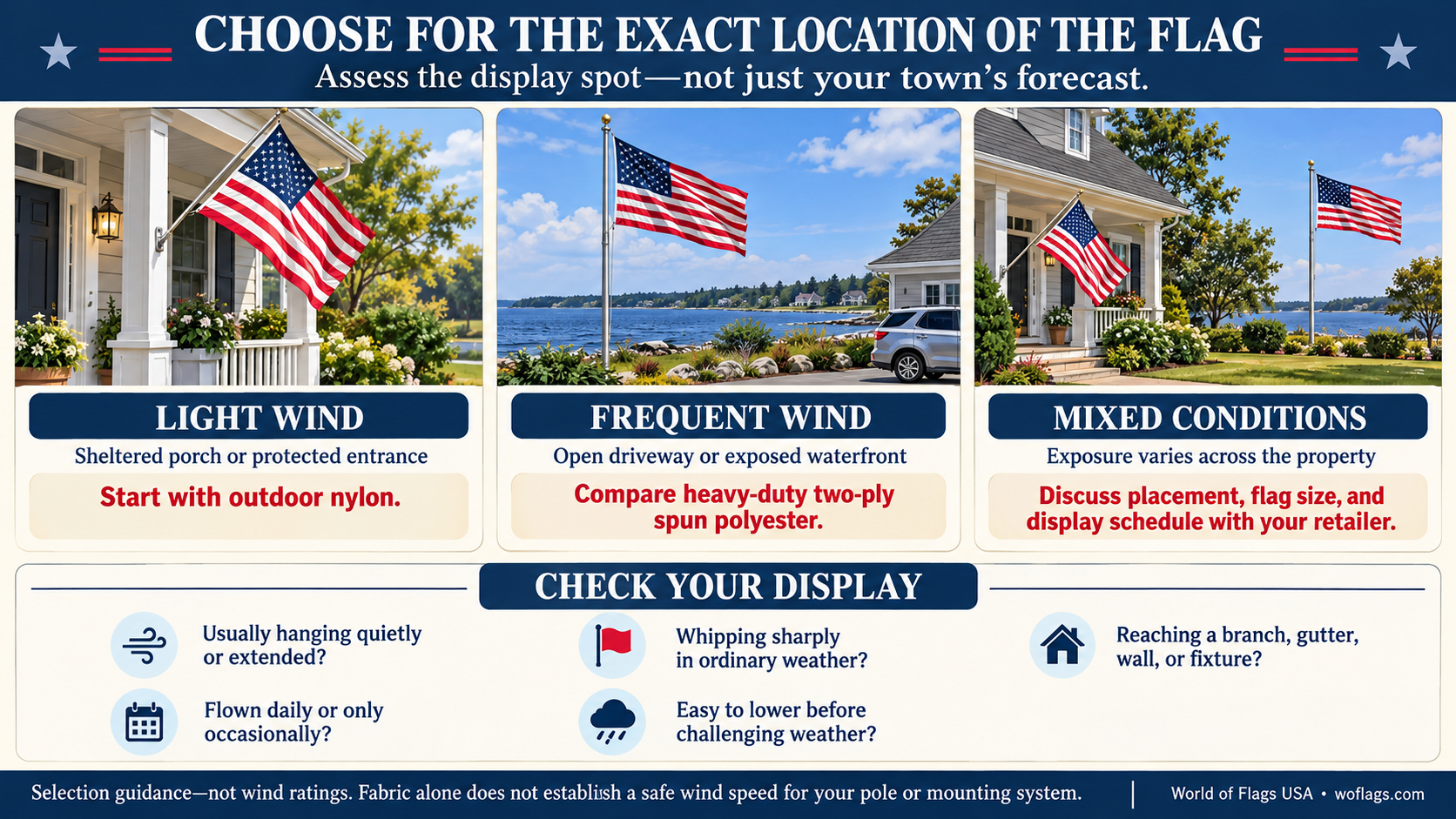
Your town’s weather forecast gives context, but the position of your flag deserves its own assessment.
A porch tucked behind a house can be sheltered while a pole near the same property’s open driveway receives considerably more wind. A waterfront building may also have a protected entrance and an exposed parking area.
Before choosing material, observe the display:
- Does the flag usually hang quietly or remain extended?
- Does it whip sharply during ordinary weather?
- Can it reach a branch, gutter, wall, or nearby fixture?
- Is it flown daily or only for selected occasions?
- Can you lower it conveniently before challenging weather?
Light-wind location: Start by comparing outdoor nylon.
Frequently windy, exposed location: Compare heavy-duty two-ply spun polyester.
Mixed conditions: Discuss the exact placement, flag size, and display schedule with the retailer.
These are practical selection guidelines, not wind ratings. A material name alone does not establish a safe operating wind speed for the flagpole or mounting system.
Think About Rain, Sun, and Winter Weather
Outdoor flags experience more than wind. Wet weather, sunlight, snow, and repeated exposure all belong in the buying decision.
Some nylon products include treatments for resistance to ultraviolet light. For example, Annin identifies SolarGuard treatment on its Nyl-Glo line. Check the named product rather than assuming every nylon flag receives the same treatment.
Likewise, a heavy-duty polyester flag is still fabric. “All-weather” describes an intended application; it does not promise unlimited exposure or permanent color.
Annin’s flag-care guidance recommends protecting flags from rain, snow, and unusually high winds to help extend their life, and drying wet flags completely before storage.
For a Maine homeowner preparing for winter, the useful question is not simply which fabric is tougher. It is also whether the flag can be brought down before a storm and whether someone will inspect it afterward.
Choose a material you can maintain realistically.
Material, Stripes, and Stars Are Separate Decisions
“Nylon” and “polyester” describe fabric. “Printed,” “sewn,” and “embroidered” describe other aspects of construction.
A nylon flag can have sewn stripes and embroidered stars. A heavy-duty polyester flag can have those details too. The presence of embroidery does not identify the underlying fabric.
For the broader construction comparison, read Printed vs. Sewn American Flags: What Is the Difference?
For a closer look at the blue canton, explore Embroidered vs. Printed Stars: Which American Flag Should You Buy?
Keep those decisions separate when shopping. First determine the fabric and outdoor application. Then compare the appearance, stripe construction, star method, and finishing you want.
A beautiful close-up photograph can help you judge texture. It cannot tell you whether the flag matches your wind exposure or attaches correctly to your pole.
Check The Pole, Flag Size, and Attachment
Changing material is a good time to review the entire display.
Confirm the flag dimensions recommended for your equipment. Check whether your existing flag uses grommets with clips or a pole hem that slides over the staff. These attachment styles are not interchangeable without suitable hardware.
Also check the pole manufacturer’s limits before selecting a heavier or larger flag. For example, Annin’s instructions for one specific eight-foot wall-mounted spinning pole restrict flag weight; the applicable limit depends on the actual equipment.
Do not treat a product photograph showing a flag on a porch as approval for every porch bracket.
If you are unsure, photograph the pole, bracket, and attachment points before asking for assistance. Include the current flag size and any available equipment model information.
That gives the retailer a clearer basis for helping you choose than asking which fabric is “best” without describing the display.
Compare Value Over The Way You Use The Flag
The lowest purchase price is easy to compare. Overall value requires a little more thought.
Compare flags of the same size and intended application. Differences in price may reflect fabric, finishing, manufacturer, or construction—not just nylon versus polyester.
For an occasional porch display, a suitable nylon flag may provide the movement and presentation you want. For an exposed business property, consider replacement frequency and the staff time involved in changing flags.
Keep a simple record of when each flag goes into service, where it flies, and why it is replaced. Note fraying, fading, attachment damage, and contact with surrounding surfaces.
Those observations can guide the next purchase. If every replacement tears where it hits a gutter, changing the fabric may leave the underlying problem unresolved.
Avoid buying on a promised lifespan. Service conditions vary too much for a universal month-by-month guarantee.
Verify American-Made Claims Separately
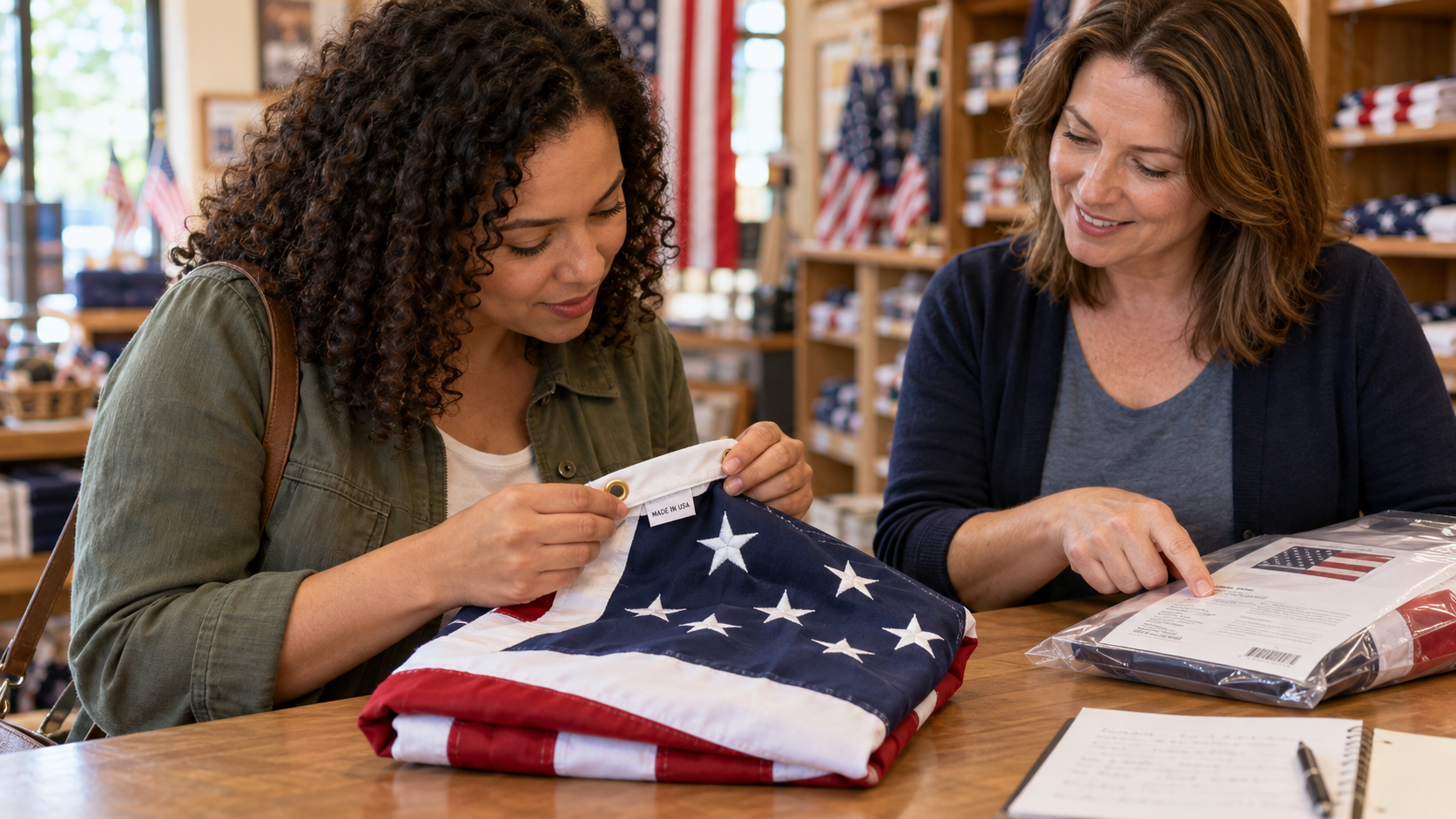
Neither nylon nor polyester establishes country of origin. Neither sewn stripes nor embroidered stars proves that a flag was manufactured domestically.
Check the specific product’s manufacturer information and origin labeling. If domestic sourcing is important to your household or organization, make that requirement part of the purchase.
Our guide, What Makes an American Flag Truly Made in the USA?, explains the separate sourcing question.
For organizational orders, write down the dimensions, fabric, attachment, construction, and origin requirements together. This makes future reordering easier and reduces the chance of receiving a different specification when another employee handles the purchase.
Care For The Flag After You Buy It
Build a short inspection into your routine. Look at the outer fly edge, stripe seams, and attachment area, especially after difficult weather.
Keep the flag clear of abrasive surfaces. Follow the manufacturer’s cleaning directions, and let it dry fully before folding or storing it.
A spare flag can make replacement more convenient when the displayed flag needs cleaning or attention. For facilities with multiple poles, assign someone to check each location rather than assuming all flags wear at the same rate.
When a flag becomes too worn for respectful display, replace it. Read Etiquettes To Dispose Of The American Flag for retirement guidance, and ask a local veterans’ organization about collection options.
Choose A Flag That Fits The Place You Honor
A good American flag purchase begins with an honest look at the display.
Nylon can provide attractive movement where winds are lighter. Heavy-duty two-ply spun polyester offers an option to investigate where daily exposure is more demanding. Both require suitable equipment, sound finishing, and ongoing care.
The most useful choice solves the problem at your property. Match the fabric to the setting, verify the complete specification, and maintain the flag so it continues to represent your home, business, or community with pride.
Frequently Asked Questions
1. What Is the Main Difference Between Nylon and Polyester American Flags?
Outdoor nylon is generally lighter, while heavy-duty two-ply spun polyester has a heavier, more textured body. Compare specific products because “polyester” alone does not identify a heavy-duty outdoor flag.
2. Which American Flag Material Flies Better in Light Wind?
Lightweight nylon is usually the better starting point. Its responsiveness can help the flag extend in lighter breezes. Size, finishing, and the actual wind at the display still affect movement.
3. Which Material Should I Consider for a Windy Location?
Compare outdoor flags made from heavy-duty two-ply spun polyester, such as Annin Tough-Tex. Also confirm the pole’s limits, clear nearby obstructions, and plan to lower the flag before severe weather.
4. Is Every Polyester Flag Suitable for Demanding Outdoor Use?
No. A lightweight printed polyester product should not be treated as equivalent to heavy-duty two-ply spun polyester. Read the fabric specification and intended application for the exact flag.
5. Is Nylon a Good Choice for a Porch Flag?
Often, particularly where breezes are lighter. Confirm the flag is intended for outdoor use and that its dimensions, weight, and sleeve or grommet attachment match your porch equipment.
6. Which Flag Should I Buy for a Coastal Property?
Assess the exact exposure first. An open waterfront pole may justify heavy-duty spun polyester, while a protected porch may suit nylon. Coastal location alone does not settle the choice.
7. Can Nylon and Polyester Flags Have Embroidered Stars?
Yes. Both fabrics are available in products with embroidered stars and sewn stripes. Fabric and decorative construction are separate specifications, so verify each in the listing.
8. How Long Will an Outdoor American Flag Last?
There is no dependable universal lifespan. Exposure, display hours, construction, contact with surrounding surfaces, and care influence wear. Inspect the actual flag rather than replacing it solely by the calendar.
9. Can I Leave Either Material Outside All Winter?
An outdoor-rated flag can be used seasonally, but winter exposure can shorten its service life. Follow product and equipment instructions, lower it before severe conditions, and inspect it regularly.
10. Does Choosing Nylon or Polyester Guarantee an American-Made Flag?
No. Country of origin must be checked separately. Look for product-specific manufacturer details and origin information rather than assuming the fabric or star construction proves domestic manufacturing.
What You Should Do Next. . .
Take a look at where your flag flies, note its dimensions and attachment style, and decide whether light-breeze movement or resistance to demanding exposure matters most. Then compare nylon and polyester American flags with World of Flags USA. Visit woflags.com or call 207-262-8275 for help choosing a flag that fits your location, equipment, and display schedule.