

An American flag flying outside a home, business or community building faces a different challenge every day. A gentle breeze becomes an afternoon gust. Bright summer sunshine gives way to soaking rain. In colder climates, wet snow and freezing weather add another season of exposure.
Even a well-made outdoor flag eventually shows wear. Its useful life depends on the fabric, construction, location, hours of display and care it receives. Weather influences all of those decisions.
Understanding how wind, sun, rain and snow affect an outdoor American flag helps you choose a suitable flag, recognize damage early and keep your display looking its best. Thoughtful care can help you get more service from your flag while maintaining a display that reflects its importance.
How Long Should an Outdoor American Flag Last?
There is no dependable lifespan that applies to every outdoor flag. A flag displayed occasionally on a sheltered porch experiences very different conditions from one flying continuously above an exposed commercial property.
Annin Flagmakers explains that outdoor flag life cannot be predicted accurately because climate, display habits and surrounding conditions vary. Treat lifespan estimates as general references rather than replacement schedules or guarantees.
For your own display, keep a simple record of the installation date, material and location. Note when fading, fraying or repairs first become necessary.
Those observations provide a useful basis for your next purchase. If repeated damage appears in the same place, investigate the installation and exposure before assuming a different fabric will solve everything.
For an overview of available materials, construction and sizing considerations, start with our American flag buying guide.
How Wind Wears Out an American Flag
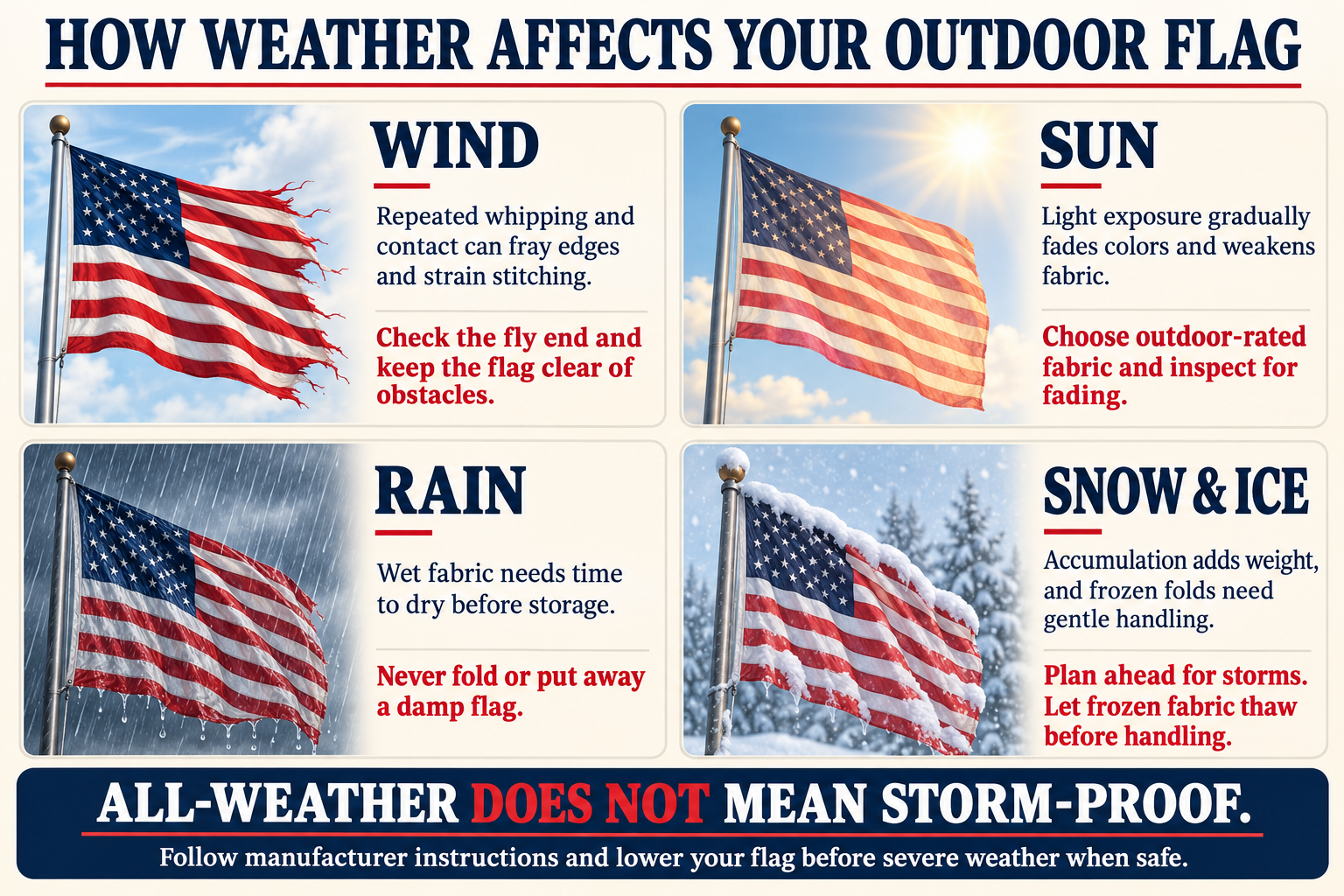
Wind gives a flag its familiar movement, but repeated flapping also works the fabric and stitching. Strong gusts create more forceful snapping, while changing wind directions can push the flag into nearby obstacles.
The outer edge, called the fly end, deserves particular attention. Look for unraveling threads, thinning corners and openings along the hem. Wind can turn an existing weakness into more extensive damage.
Flags Unlimited identifies high winds and repeated contact with branches or buildings as causes of accelerated wear, especially along the fly end.
Observe your flag from a safe location during ordinary breezes. Does it move freely? Does it catch on the pole ornament, wrap around the staff or strike the gutter?
If it repeatedly catches or rubs, address that problem promptly. Replacing the flag without correcting the contact point leaves the next flag exposed to the same damage.
Give the Flag Enough Clearance
Consider the full area the flag can reach when the wind changes direction. Check nearby siding, roof edges, railings, shrubs and branches.
A location that provides clearance for a smaller flag may be unsuitable for a larger one. Before increasing flag size, confirm that both the available space and the pole system can accommodate it.
Our Guidelines for Sizing Your Flag for Display can help you evaluate display proportions. Also follow the pole manufacturer’s guidance for flag dimensions and loading, especially at exposed properties.
How Sunlight Fades and Weakens Flag Fabric
Sun damage develops gradually. Red stripes may lose their richness, and a deep-blue canton may become noticeably lighter.
Light exposure affects more than appearance. The National Park Service’s textile conservation guidance explains that light can fade dyes and ultraviolet radiation can weaken textile fibers. Outdoor flag fabrics are designed for exposure, but resistance does not make them immune to deterioration.
Inspect the entire flag when evaluating fading. Compare its overall color, the condition of the cloth and the strength of its seams. A flag can retain an intact outline while looking substantially weathered.
When buying, look for product-specific information about outdoor use and fade resistance. Keep the packaging or care instructions so you can check the manufacturer’s recommendations later.
Reduce Unnecessary Exposure
Think about your actual display schedule. If you fly a flag only for holidays or special events, take it down afterward and store it properly.
For daily displays, include color changes in your regular inspections. A photograph taken when the flag is new can provide a helpful comparison several months later.
Avoid applying a fabric treatment simply because it promises UV protection. Check with the flag manufacturer before adding any coating or spray.
If your display continues after sunset, review How to Light Your Flag at Night as part of your display planning.
How Rain Affects an Outdoor Flag
Rain brings moisture into the flag and its seams. How quickly it dries depends on the fabric, construction and conditions after the shower.
An outdoor nylon flag is often a practical choice where lightweight movement and quick drying matter. Olympus Group identifies those characteristics in its outdoor nylon flags. Nevertheless, its care guidance recommends avoiding rain and other harsh weather when maximizing service life is the priority.
After a soaking rain, inspect the flag when you can handle it safely. Look for staining, damaged stitching and wear around its attachment points.
Allow a wet flag to dry completely before folding, rolling or storing it. Annin specifically cautions against putting away a damp flag because colors may run or mold may develop. Follow the care directions for your particular product. annin.com
Plan Ahead for Wind-Driven Rain
A passing shower and a storm with forceful gusts present different conditions. Base your decision on the complete forecast, including wind, precipitation and any warnings.
If removal is appropriate, lower the flag before the storm arrives, while conditions remain safe. Make that part of your routine rather than waiting until the flag is already whipping violently.
Never put yourself at risk to retrieve a flag during lightning, dangerous winds or hazardous footing.
How Snow and Ice Affect an Outdoor Flag
Winter adds wet snow, freezing precipitation and difficult access to the display. Snow or ice collecting on a flag adds weight, while frozen folds make handling more difficult.
A practical winter plan starts before precipitation arrives. Consider whether the flag can be lowered safely and where it can thaw and dry afterward.
If the fabric becomes frozen together, avoid pulling the folds apart or forcing a stiff flag into storage. Let it thaw gently in a suitable indoor space, following the manufacturer’s care instructions, and inspect it before displaying it again.
Check the surrounding area as well. A winter display may be harder to reach because of snowbanks, slippery steps or ice near the pole.
Manufacturers including Annin recommend limiting exposure to snow and unusually high winds to help extend flag life.
Does “All-Weather” Mean a Flag Can Stay Outside Through Any Storm?
The U.S. Flag Code provides an exception for all-weather flags when advising against display during inclement weather. That exception addresses appropriate display; it does not promise unlimited durability.
Read “all-weather” alongside the product’s intended use, care instructions and any limitations. A flag suitable for routine outdoor conditions can still suffer damage during severe weather.
Use the same care when evaluating descriptions such as “heavy duty” or “weather resistant.” Ask what fabric and construction those terms describe.
For a home or business, consider whether continued exposure is appropriate for the particular flag, pole and forecast. Bringing a flag indoors ahead of damaging weather is a reasonable part of maintaining a respectful display.
Choose the Material for the Actual Location
Start with where the flag will fly. Is the property sheltered or exposed? Does the flag move in gentle breezes, or does it face frequent strong winds? Will someone be available to lower it before storms?
For many residential settings, outdoor nylon offers lightweight movement. For more demanding locations, heavy-duty two-ply spun polyester is an option worth comparing. Flags Unlimited distinguishes that construction from lighter, budget polyester fabrics, demonstrating why the word “polyester” alone does not establish durability.
Our guide to Nylon vs. Polyester American Flags explores those choices in more detail.
Ask about the specific product rather than choosing by material name alone. Review the heading, attachments, stitching and intended application.
Construction is another consideration. Read Printed vs. Sewn American Flags: What Is the Difference? to understand how the design is applied or assembled.
If domestic manufacture matters to your purchase, verify that separately from weather performance. Our article What Makes an American Flag Truly Made in the USA? explains what to look for.
Build a Simple Flag Inspection Routine
Choose a regular inspection day and check again after significant weather. A weekly reminder can make the task easier to remember.
Lower the flag for a closer look when practical and safe. Examine:
- The fly-end hem and both outer corners.
- Seams between sewn stripes.
- The heading or pole sleeve.
- Grommets and the fabric surrounding them.
- Areas showing unusual discoloration or thinning.
Check the installation during the same visit. Look for loose attachments, snagging points and surfaces the flag can strike.
Take photographs if damage is developing. They help you judge whether a small defect is growing and explain the problem when requesting advice.
Clean, Dry and Store the Flag Carefully
Cleaning instructions vary, so begin with the manufacturer’s directions. Confirm the appropriate washing method, detergent and drying process for your specific flag.
Arrange a clean drying area before washing. Keep the fabric away from rough surfaces that could snag it, and allow adequate time for it to dry throughout.
Before storage, inspect the seams and heading for remaining dampness. Store the dry flag somewhere clean and protected from unnecessary light exposure.
For a business or community organization, designate someone to oversee this routine. Keep the care instructions with the display supplies so another staff member can follow them.
A spare flag can make maintenance easier by allowing time to clean, inspect or repair one flag while another is available.
Know When Repair or Replacement Makes Sense
A small defect deserves attention before the next windy day. Ask whether a proper repair can restore a sound, presentable flag.
Consider the condition of the surrounding cloth as well as the damaged spot. Repeated repairs become less useful when the fabric is broadly worn or badly faded.
The Flag Code calls for dignified disposal when a flag is no longer a fitting emblem for display. Contact a local veterans organization or established collection program to ask whether it accepts worn flags for retirement. www.govinfo.gov
For further guidance, read Etiquettes to Dispose of the American Flag.
Keep a replacement available if your property maintains a regular display. That makes it easier to remove a worn flag promptly.
Related Flag Display Guides
Weather care is one part of managing a complete flag display. These additional guides may help if your home, business or organization maintains several flags or observes formal display occasions:
- What Materials Are Used to Make Maine State Flags? — Additional material information for readers who also display Maine’s flag.
- Guidelines and Regulations for Displaying State Flags — Related reading for properties displaying state flags alongside the American flag.
- Guidelines for Flying the American Flag at Half-Staff — A reference for incorporating half-staff observances into your display routine.
Frequently Asked Questions About Weather and Outdoor Flags
1. Which Weather Conditions Should I Watch Most Closely?
Pay particular attention to strong winds, severe storms and freezing precipitation. Also watch gradual changes during sunny seasons. Your inspection history will help identify which conditions cause the most trouble at your location.
2. Can an Outdoor American Flag Get Wet?
A flag intended for outdoor use can encounter rain, but follow its care instructions afterward. Check its condition and dry it completely before storage.
3. Will a More Expensive Flag Last Longer?
Price alone cannot establish service life. Compare the actual fabric, construction and intended application, then consider how the flag will be displayed and maintained.
4. Is Every Polyester Flag Suitable for High Winds?
No. Polyester flags differ in weight, weave and construction. Ask whether the particular product is designed for demanding outdoor display.
5. Should I Take My Flag Down Before a Snowstorm?
Plan ahead based on the forecast, product guidance and safe access. Removing the flag before conditions deteriorate can simplify winter care.
6. Can I Leave My Flag Outside All Year?
Year-round display requires year-round attention. Choose a suitable outdoor flag and establish a plan for inspections, weather decisions, cleaning and replacement.
7. Why Does My Flag Keep Tearing in the Same Place?
Inspect that area for contact with the pole, hardware or nearby surfaces. Document the pattern and ask for help evaluating the installation.
8. Can I Put a Damp Flag Away Temporarily?
Allow it to dry completely first. Set aside a suitable drying space whenever you expect to bring a wet flag indoors.
9. Should I Replace a Flag on a Fixed Schedule?
Use scheduled inspections and condition-based decisions. A calendar reminder is helpful, but it cannot account for every storm or change in exposure.
10. What Information Helps When Buying a Replacement?
Bring the current flag’s size, material, display schedule and photographs of wear. Describe the location and typical weather so the next selection addresses your actual needs. 
What You Should Do Next
Take a close look at your current flag and the space around it. Note fading, loose stitching, repeated contact and any difficulty lowering it before storms.
When you are ready to replace it, choose with those observations in mind. Share your location, pole dimensions and display habits with World of Flags so you can compare suitable options.
Call World of Flags USA at 207-262-8275 for help choosing an outdoor American flag for your home, business or community.